Water Heater Leak Cleanup in Los Angeles, CA
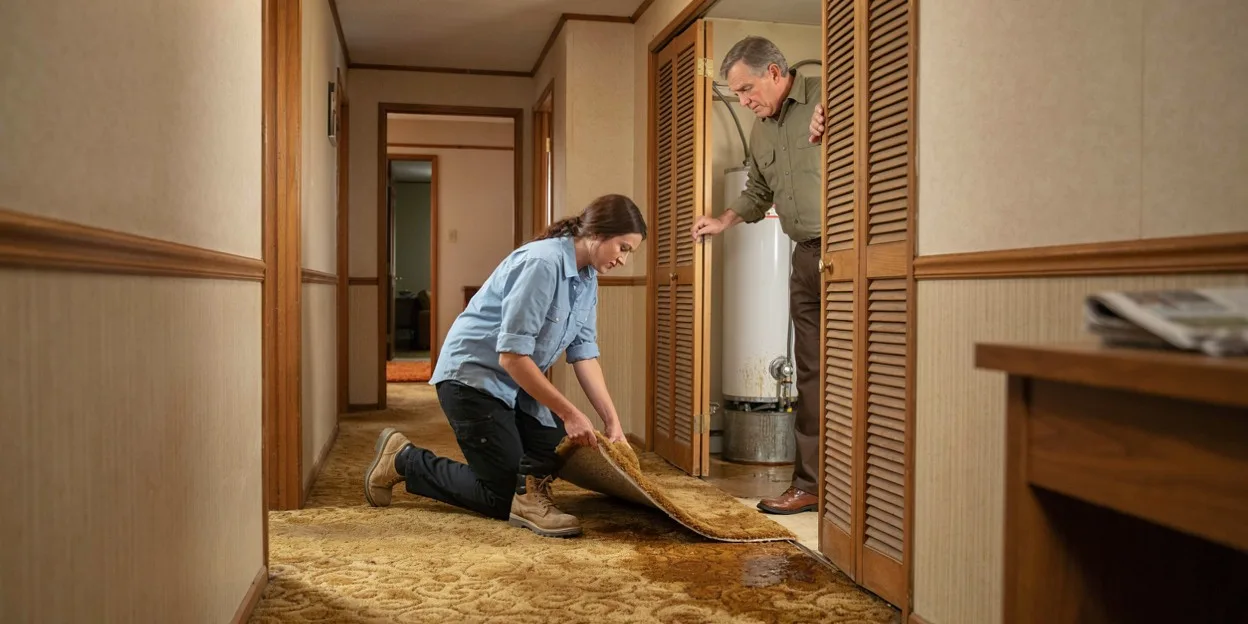
You went into the garage for the car and stepped into a puddle spreading out from under the water heater. The tank is twelve years old and there is a rust line around the bottom seam. This site connects you by phone with an independent local provider who cleans up after a water heater leak in Los Angeles County.
Isolating the tank and following forty gallons
The crew confirms the tank is isolated. That means the cold-water valve at the top of the tank is shut and the gas valve is closed or the breaker is thrown. Next comes extraction of the puddle on the garage floor, and then tracing wherever the rest of it ran. A 40 or 50 gallon tank does not sound like much until it is on the floor, and a slow leak that ran for days can put far more than that into the drywall and the slab.
To learn how far the water traveled, the crew meters the drywall behind the tank, the studs of the closet, and the floor on the far side of the wall. Air movers and dehumidifiers then stay in place until every one of those readings drops back to normal.
Close the cold valve and kill the gas before anything else
Find the cold-water supply pipe that feeds the top of the tank and shut its valve. For a gas heater, set the gas control to off; for an electric one, cut the breaker. Look at where the water is escaping: if it is the relief valve pipe on the side and not the tank body itself, the valve may have failed while the tank is still sound. Tell the crew.
Move boxes and anything on the garage floor out of the wet area. Photograph three things: the tank itself, the spread of the puddle, and the rusted seam or drip point where it let go. Then make the call. A new heater is a plumber's job. Everything the water soaked, from the slab to the drywall, belongs to the cleanup crew.
Garage slab versus hall closet: what dries and what comes out
Garage slabs and concrete clean up fine. Drywall that got wet at the bottom in a garage often dries in place if it is caught quickly, since garages are open and unfinished. A hall-closet tank inside the house is a different story: soaked carpet pad, the particleboard shelves in that closet, and baseboard that has already swelled are usually removed.
Hardwood in the hallway outside a closet tank can go either way. Have the crew record wall-base readings both before the equipment goes in and after it comes out. When the water crossed under a wall and reached a bedroom carpet, the remainder of the job is structural drying.
Earthquake straps, platform tanks, and the shared condo wall
Every water heater in California has to be strapped to the wall under the state's earthquake rules. The two straps keep the tank from tipping. They do nothing about a tank that rusts through from the inside. Many LA tanks last eight to twelve years.
The location of the tank in an LA home tells you which way forty gallons will run. Garage tanks in older homes sit on an 18-inch platform and the floor slopes toward the driveway, so some of the water leaves on its own. Closet tanks in 1960s and 1970s apartments and condos open onto carpeted hallways, and the water goes into the next unit through the wall. In a condo, tell the HOA in writing. The CC&Rs decide who is responsible for the shared wall. If the floor near the tank is warm but the tank is dry, the line under the slab may be the leak. See leak detection.
When a tank fails suddenly, many policies pay for the water damage it caused while leaving the cost of the heater itself to you. If the same tank has been weeping at the seam for months, the adjuster may call it gradual instead. For the adjuster's file, have the crew photograph the tank, the seam or fitting that failed, and the moisture readings they took. Replacing a water heater in the City of Los Angeles needs a plumbing permit from LADBS.
When you call about a tank that let go in the garage or closet
Have the address ready and say where the tank is: garage, closet, or attic. Say the tank size if you know it, whether the water is off, whether the water reached carpet or the next room, and whether a plumber is already on the way. Call (213) 513-2640.