Wildfire Smoke Damage Cleanup in Los Angeles, CA
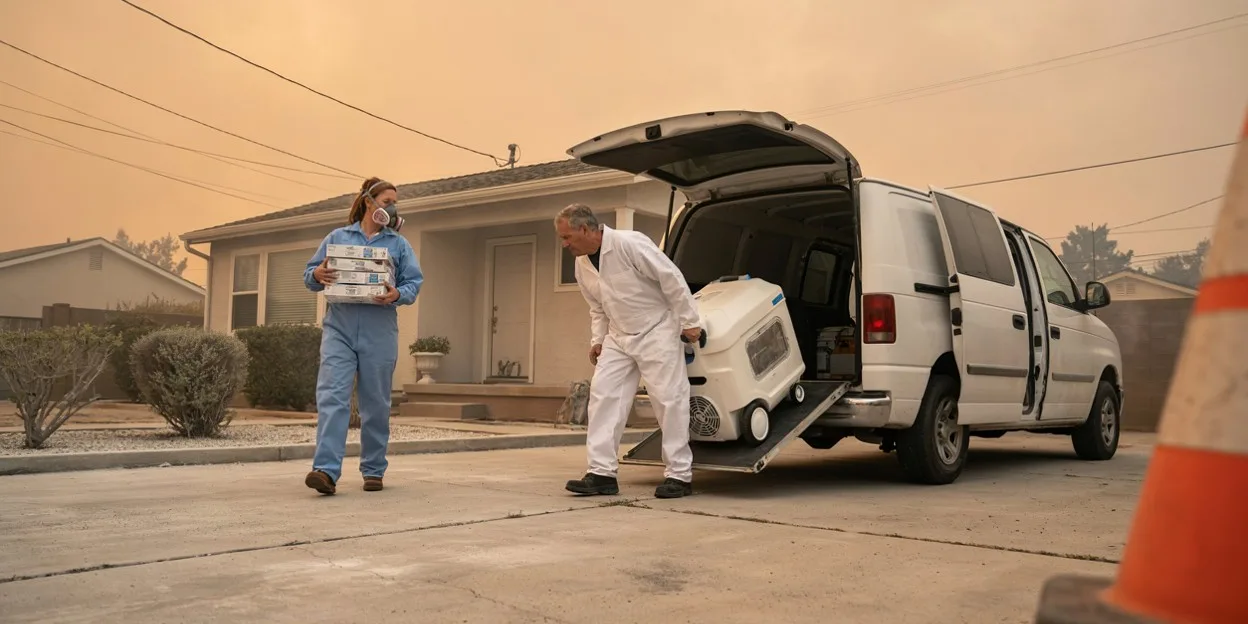
Your house is still standing. The fire stopped a few streets away, but when you opened the front door the smell hit you, and there is a film of gray ash on every windowsill and countertop. This site connects you by phone with an independent local provider who cleans wildfire smoke and ash damage in Los Angeles County.
Dry HEPA removal from the top down
The crew walks the house room by room and notes where ash and residue are heaviest. Smoke follows air paths, so the rooms nearest the windward windows and the return vents are usually worst. They check the HVAC filter and the inside of the return duct, because a system that ran during the fire pulled smoke through every room.
Then they clean from the top down. HEPA vacuums pick up loose ash from surfaces and soft goods before anything gets wet, because wet ash smears and sets. Walls, ceilings, cabinets, and hard floors get wiped with dry sponges and then washed. Odor treatment comes last, after the residue that causes the smell is gone.
Do not sweep the ash: what to do before the crew arrives
Do not sweep, and do not use a household vacuum without a HEPA filter. Both put the finest ash back into the air. Do not run the HVAC system until the filter is changed and the ducts have been looked at. Keep windows closed if there is still smoke outside.
Wear an N95 and gloves if you need to be inside for long. Take photos of the ash on surfaces before anyone cleans. Set aside clothing and bedding you want cleaned, and do not wash them with other loads.
Most of a smoke-hit house is cleanable
Most of a smoke-affected home that did not burn is cleanable. Hard surfaces, sealed floors, solid furniture, dishes, and glassware clean well. Clothing, bedding, and drapes usually come back with the right laundering. Electronics need a look before they are turned on, since fine ash inside can corrode the boards.
Open food, medicine, and cosmetics that were exposed are usually discarded. Porous items that hold odor, like foam mattresses, some upholstered pieces, and cardboard, are case by case. Carpet and pad can often be cleaned, but a rug that still smells after cleaning may need to go. Ask the crew to list what they recommend discarding, and photograph it first.
The Palisades and Eaton fires, and the ash they left behind
The Palisades and Eaton fires in January 2025 burned into Pacific Palisades, Malibu, Altadena, and parts of Pasadena. Many more homes than burned took smoke, ash, and wind-blown debris. Ash from burned homes is not the same as ash from brush. LA County Public Health advised that it can contain metals and other materials from building contents, which is why dry HEPA removal and proper disposal matter.
Santa Ana wind season runs roughly October through January, and foothill neighborhoods from Sylmar to Sierra Madre sit next to brush. Homes right at a fire line sometimes took water from hoses or roof sprinklers as well. Water extraction covers that. Burn scars above a neighborhood shed mud in the next rainy season, which is where flood cleanup comes in.
Smoke and ash damage is often handled under the fire portion of a homeowner policy, but the details vary. Ask the crew to photograph the residue and list every room and item cleaned so your adjuster has a record. If you rent, tell the landlord in writing. The landlord's provider may handle the structure while you handle contents.
When you call about smoke and ash in a standing home
Have the address ready and say whether the area has been reopened. Be ready to say whether power and water are on, how heavy the ash is, whether the HVAC ran during the fire, and whether you are living in the home now. Call (213) 513-2640.